


BarBack - Cocktail Assistant
3.890.00 Reviews
App Specs
- Version
- 4.0.3
- Updated On
- License
- Free
- Downloads
- 50,000+
- Developer
- Linkrulz Software
- Categories
- Food & Drink
- Platform
- Android
Screenshots
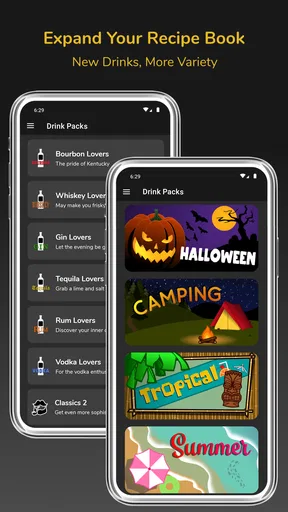
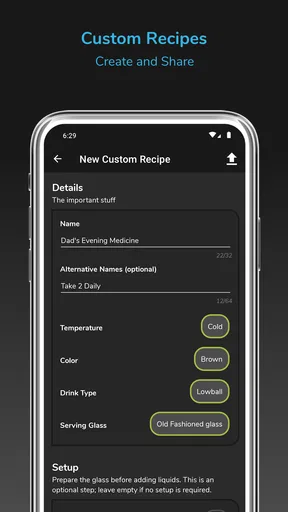
 Analysis by AppCompare
I tried BarBack - Cocktail Assistant as a practical drink companion rather than treating it like a recipe catalogue, and that distinction matters. Its role is simple: help you think through cocktails when you are standing in a kitchen, behind a home bar, or deciding what to make with a bottle and a few mixers already available. It is a Food & Drink app from Linkrulz Software, and the “pocket assistant” idea works best when you want quick guidance instead of a long evening of browsing.
The app is free to install, with optional in-app purchases priced at $0.99 per item. That makes it easy to test without committing money first, although the purchase model is worth keeping in mind if you expect to use every available part of the experience. It is rated for Everyone, runs on operating systems from version 11 onward, and the current release is 4.0.3. Those details make it approachable for a broad audience, but they do not automatically make it the right tool for every kind of cocktail enthusiast.
How BarBack fits into real drink-making
What I like about the concept is that it addresses a common problem: people often own several spirits, juices, syrups, or soft drinks but do not know how to combine them confidently. A conventional web search can produce too many results, conflicting measurements, and recipes that assume you have specialist ingredients. A printed cocktail book is more pleasant for browsing, but it is slower when you are trying to use what is already on the counter.
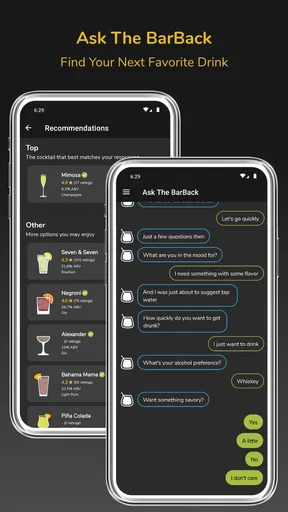
BarBack is more useful in that moment of uncertainty. I would open it before a casual gathering, check what kind of drink direction makes sense, and use it as a prompt for the next decision. That is a smaller promise than replacing a professional bartender, but it is also a more believable one. The app’s value comes from reducing hesitation and helping you move from “I have these bottles” to “I can make something reasonable with them.”
The developer, Linkrulz Software, has positioned the app around assistance rather than a broad lifestyle platform. I found that focus helpful because it keeps the experience tied to a specific task. You are not opening it to manage a shopping list, track drinking habits, or plan an entire event. You are opening it because you want cocktail help at the point of preparation.
What the free entry point means
The most important value detail is that the app itself is free to install. For a person who only makes mixed drinks occasionally, that lowers the risk considerably. You can see whether the workflow suits you before spending anything, which is better than paying upfront for a specialist tool you may use only a few times each year.
Optional items cost $0.99 each. I would treat those purchases as convenience upgrades rather than assume they are essential to the basic idea. If you only need occasional inspiration, the free access may be enough to justify keeping the app around. If you want the fullest possible collection or the extra material attached to individual purchases, the total value depends on how often you make cocktails and how much you enjoy experimenting.
Worth Reading Before You Choose

EA SPORTS FC Mobile 26 Is a Bigger Football Game, but It Takes Time

Flipboard Shows What News Apps Must Do Beyond the Feed

Switching to Android Auto Means Rethinking Your Driving Routine

Google Calendar Makes a Crowded Week Easier to Manage

Ludo King Makes the Most of the Minutes Between Plans

Baby Panda World Brings Quick Play to Modern Phones, but Its Game Library Feels Busy
This is also where expectations should stay realistic. A low individual price does not necessarily mean unlimited value. Several small purchases can become less attractive than a single, well-organized recipe book if you are a serious hobbyist who wants depth, background, and reliable technique. On the other hand, someone who wants a quick helper on a phone may prefer paying only for the pieces they actually use rather than buying a large reference library.
A realistic evening with the app
Imagine having a few friends over after work. You have a bottle of gin, some citrus, a sweet mixer, ice, and perhaps one or two items left over from an earlier gathering. Nobody wants to spend fifteen minutes scrolling through unrelated recipes, and nobody wants to make a complicated drink that requires a last-minute shop visit. This is the setting where I see BarBack making the most sense.
I would use it to narrow the options, compare the suggestions with what is physically available, and choose the drink that creates the least friction. The practical tip is to check your ingredients before opening the app and treat the result as a plan, not a command. If a recipe calls for one missing garnish but the main balance is still workable, you can decide whether that omission matters. If a key ingredient is missing, it is better to switch direction than force a poor substitute.
That workflow sounds obvious, but it prevents one of the most common problems with cocktail apps: choosing an attractive recipe first and discovering later that half the ingredients are unavailable. BarBack is best used as a bridge between your cupboard and a drink idea, not as a reason to buy every ingredient shown to you.
Where it is more useful than a normal search
Search engines are excellent when you already know what you want. If I want a specific classic cocktail, a web search can provide several versions and plenty of context. The weakness is that search results are not always organized around my actual stock. I may have to open multiple pages, dismiss recipes with unusual ingredients, and work out which measurements are sensible.
A dedicated assistant can make that decision-making process feel more direct. The benefit is not necessarily that every suggestion will be better than a bartender’s recommendation. The benefit is that the app gives the task a defined shape. It encourages me to think in terms of available ingredients, drink style, and practical preparation instead of endlessly browsing.
There is a trade-off, though. A web search offers a much wider range of voices, regional variations, technique explanations, and user comments. BarBack is the better choice when speed and focus matter; the web or a serious cocktail book is better when I want to study why a drink works or compare several established interpretations.
Small habits that improve the experience
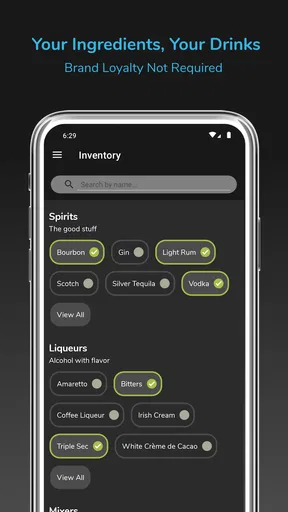
My first useful habit would be to keep an informal mental inventory of ingredients before relying on the app. This is especially important with perishables. Citrus, herbs, and opened mixers can change quickly, so a suggestion that looks good on screen may not be practical by the time you prepare it. Starting with what needs to be used soon can make the app more valuable than simply browsing by spirit.
A second tip is to use it for controlled experimentation rather than random improvisation. Change one element at a time: the main spirit, the sweet component, or the sour component. That makes it easier to understand the result and remember what worked. If you change everything at once, the app may help you produce a drink, but it will not help you learn your own preferences.
A third is to save your own informal notes outside the app after making something successful. I would record the drink name, the adjustment I made, and whether guests actually enjoyed it. An assistant can help with the first attempt, but personal notes become more useful over time because they reflect your taste, your glassware, and the ingredients you normally keep at home.
Limitations I would consider before relying on it
The biggest limitation is that a cocktail assistant cannot judge the condition of your ingredients, the quality of your ice, or your preferred level of sweetness. A recipe can be technically suitable and still taste wrong to you. I would therefore avoid treating any recommendation as an absolute formula. Taste, dilution, temperature, and serving size all affect the result.
There is also a difference between helping a beginner choose a drink and teaching advanced bartending. If your goal is to master stirring technique, understand dilution, build a serious home-bar programme, or study the history of classic recipes, a dedicated book or instructional source will probably serve you better. BarBack makes more sense as a decision aid than as a complete education.
The optional purchase structure may also create hesitation for users who want to know the full scope before they begin. Since individual items are priced separately, I would not buy anything immediately. I would first use the free portion, decide whether the interface and recommendations fit my habits, and only then consider a $0.99 purchase that solves a specific need. That approach keeps the cost tied to real use rather than impulse.
Another practical concern is device compatibility. The requirement for operating system version 11 or later is reasonable for many current phones, but anyone using an older device should check compatibility before planning around the app. The Everyone age rating makes it broadly approachable, but that rating should not be confused with advice about responsible alcohol consumption. The app can assist with preparation; it cannot make decisions about whether someone should drink.
Who is likely to get the most value
I think BarBack is a good fit for casual hosts, beginners, and people who buy spirits for one occasion and then struggle to use the remaining bottles. It can also suit someone who likes variety but does not want to memorize recipes. The free starting point is particularly attractive for these users because they can test the idea without turning cocktail-making into a larger purchase.
It may also help couples or small groups who enjoy choosing a drink together. Instead of one person becoming the permanent bartender, you can use the app to create a shortlist, discuss what sounds appealing, and adapt the final choice to the ingredients on hand. That shared decision can be more useful than simply handing someone a recipe and asking them to follow it.
I would be more cautious recommending it to professional bartenders, serious collectors, or people who already have a trusted recipe system. Experienced users may find a general assistant slower than their own knowledge, especially when they need exact technique, rapid service, or detailed control over balance. For them, a specialized reference or personal bar notebook may be more efficient.
It is also not the best match for someone who wants a completely alcohol-free drink planner, a nutrition tracker, or a shopping-management tool. Those needs require a different focus. BarBack’s appeal is narrow and practical: it helps turn cocktail ingredients into a drink choice. The narrower purpose is a strength when that is what you need, but a weakness when you expect an all-in-one beverage app.
How it compares with familiar alternatives
Compared with a printed cocktail book, BarBack is quicker to consult and easier to keep with you, especially when your hands are already busy in the kitchen. A book usually wins for browsing, visual presentation, and deeper explanation. I would choose the app for an improvised evening and the book for a relaxed learning session.
Compared with a general recipe website, the app feels more focused, while the website usually offers more variety and community discussion. Online recipes can be excellent, but they often require more filtering. BarBack’s advantage is the reduced search burden; its disadvantage is that you may have less surrounding context when a recommendation needs adjustment.
Compared with asking a knowledgeable friend, the app is always available and does not require someone else to be online. A friend may still give better advice when they know your taste or can inspect your ingredients. I see BarBack as a useful first opinion, not a replacement for personal experience or a skilled bartender’s judgment.
My verdict on the value
After using it as an everyday cocktail helper, I see a sensible free app with a clear audience rather than a complete bar-management system. Its strongest quality is convenience: it gives uncertain drink-makers a starting point and encourages them to work with what they already have. That can save time, reduce wasted ingredients, and make hosting feel less intimidating.
The value becomes weaker if you expect advanced instruction, exhaustive reference material, or a single purchase that covers every possible need. The optional $0.99 items are small enough to test selectively, but I would still judge each one by how often it will be used. Occasional drink-makers should start free and stay selective. Frequent experimenters may find the purchases worthwhile, although a quality cocktail book could offer better long-term depth.
The app has reached over 50 thousand installs and holds a 3.8 average from around 338 ratings, with roughly 90 written reviews. Those figures suggest a real but not overwhelming user base, so I would read the rating as a reason to try it personally rather than as proof that it will suit every bar setup. The current version, 4.0.3, is the one I would evaluate on a compatible device before deciding whether it deserves a permanent place on my phone.
My recommendation is to try BarBack if you want quick, low-risk help choosing cocktails from ingredients you already own. I would skip it if your priority is professional-level technique, deep cocktail history, detailed personal tracking, or a fully alcohol-free planning tool. For the casual host or curious beginner, the free entry point makes experimentation reasonable. For everyone else, its usefulness depends less on the name of the app and more on whether you genuinely need a pocket decision-maker when the bottles are already in front of you.
In my experience, that is the honest way to look at it: not as a replacement for taste, practice, or good judgment, but as a convenient nudge toward a workable drink. When used with that expectation, BarBack - Cocktail Assistant delivers a focused kind of value without asking you to commit before you know whether its approach fits your routine.
Pros
- Quickly suggests cocktails based on the ingredients you already have.
- Useful ingredient and tool lists help beginners build a home bar.
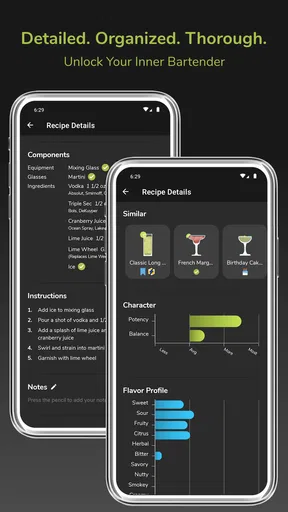
- Clear recipe steps make mixing drinks easy to follow.
- Supports discovering new cocktails beyond common classics.
- Convenient reference for checking recipes while hosting guests.
Cons
- The cocktail catalog may feel limited for advanced mixology enthusiasts.
- Some recipes may require premium or hard-to-find ingredients.
- Ingredient matching can be less useful when quantities are not entered.
- The interface may take time to navigate when browsing many recipes.
- Results depend on accurate bar inventory information from the user.
FAQs for BarBack - Cocktail Assistant
What is BarBack - Cocktail Assistant used for?
BarBack - Cocktail Assistant is designed to help users discover, prepare, and organize cocktails at home. It typically provides drink recipes, ingredient lists, preparation instructions, and useful guidance for mixing. It can be helpful for beginners learning basic techniques as well as more experienced users who want inspiration when choosing what to make with the ingredients already available.
Does BarBack include cocktail recipes for beginners?
Yes, the app is suitable for beginners because cocktail recipes generally present the required ingredients and preparation steps in an accessible format. New users can use it to learn common drink combinations, understand measurements, and follow instructions more confidently. However, results may still depend on using suitable glassware, ice, fresh ingredients, and basic bar tools.
Can BarBack help me find recipes based on the ingredients I have?
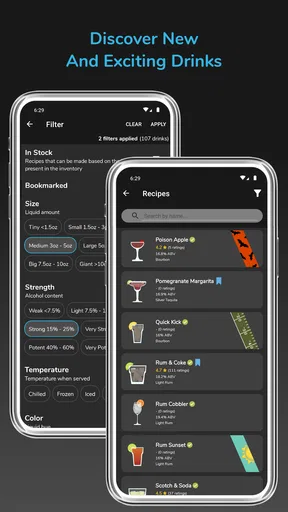
One of the most useful reasons to use a cocktail assistant is the ability to explore drinks according to available ingredients. BarBack may help you identify recipes that match spirits, mixers, syrups, garnishes, or other items in your home. Before downloading, remember that the exact filtering options and recipe coverage can vary depending on the app version and platform.
Does BarBack - Cocktail Assistant require an internet connection?
Some functions may work without a constant internet connection if recipes and supporting content are stored locally, while other features could require access to the internet for updates, searches, images, or synchronized data. The precise offline experience may depend on your device and app version. It is recommended to open the app once online before relying on it during a party or trip.
Is BarBack free to download, and are there any in-app purchases?
The download price and available features can differ between the Android and iOS versions. Some cocktail applications offer free access to core recipes while reserving advanced tools, additional content, or an ad-free experience for optional purchases. Check the official store listing before installing BarBack to confirm its current price, advertising policy, subscriptions, and any in-app purchase requirements.


